%20(1).avif)
The Mind Behind
On The Mind Behind, we explore what real, everyday leadership looks like with leaders who are unique, influential, engaging, and have that extra something. We get below the surface and ask the questions you want answered. We get to the heart of what’s worked, what hasn’t, and what makes the difference. We look at what’s happening now and gain insights into what’s next. One thing for sure, we encourage opinions.
Listen in for open conversations, honest insights, new ideas, and a bit of fun.

Featured Episodes
.avif)
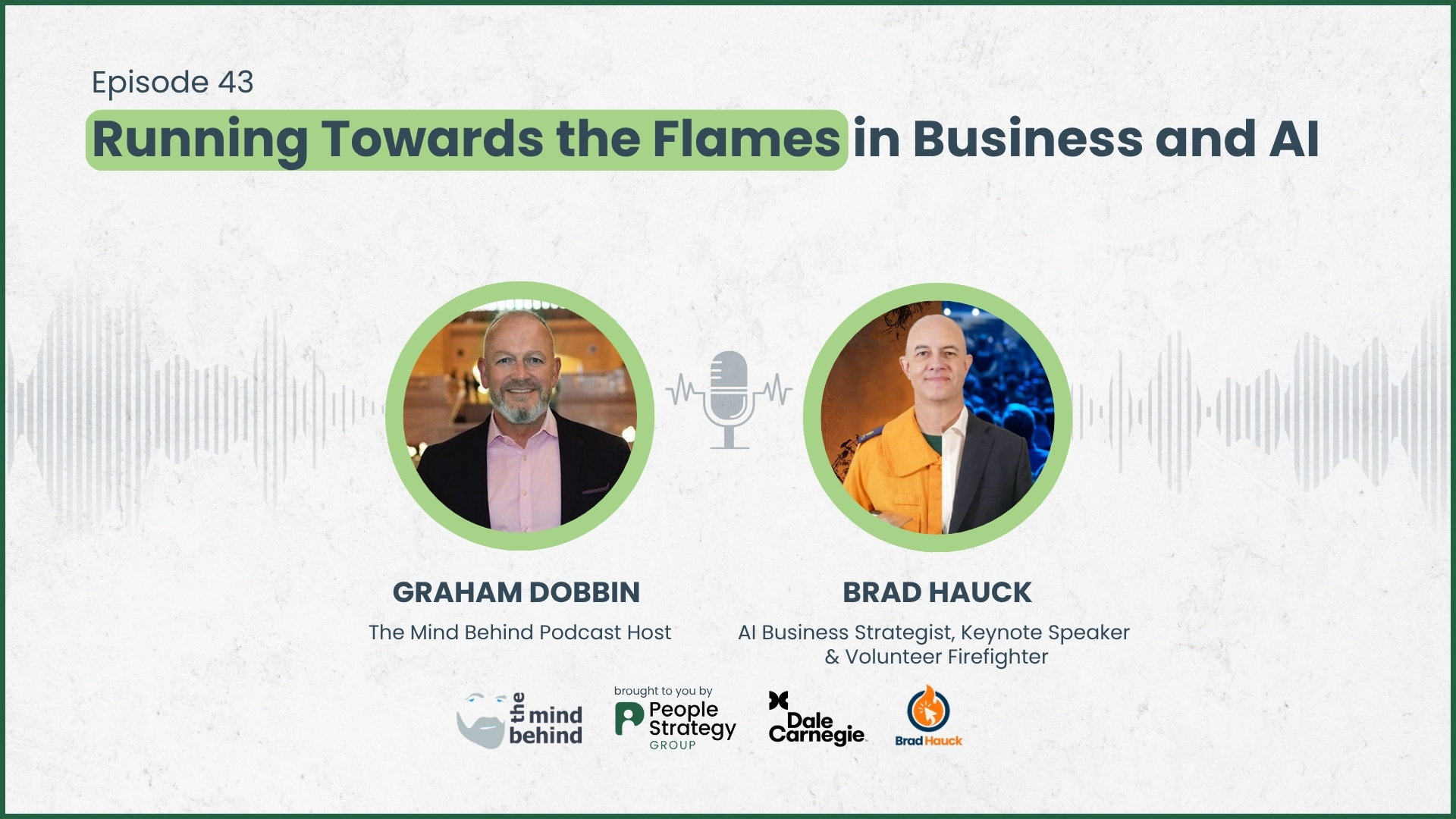
In a bushfire, 85-90% of houses go up from embers landing on the roof. Brad Hauck thinks AI is doing the same thing to businesses right now.
Brad has spent 20 years as a volunteer firefighter with the Rural Fire Service Queensland and now leads 55 firefighters as the officer in charge of his station. He's also an AI Business Strategist with more than three decades in digital strategy, and now advises business owners on getting AI to actually work. The fire ground taught him how to make decisions under pressure. He brings those same instincts to the businesses he works with.
Graham and Brad sit down to talk about what connects the two worlds, and why corporate hesitation is the biggest risk in an AI market that won't wait.
Tune in to hear:
💡 Why “no decision is worse than a bad decision”, from someone whose job has depended on it
💡 The 70% rule: making the call when you don’t yet have all the information
💡 Why one-hour software workshops don’t stick, and the training rhythm Brad runs every Tuesday night with his crews
💡 What AI can’t touch: human-to-human contact and earned trust
💡 Why post-COVID work hasn’t snapped back, and what’s replacing it
🎯 Plus: Brad’s read on the next 5 years, why he thinks micro-businesses and local networks come back into their own, and the inch-by-inch advice he gives every leader he works with.
Whether you’re cautious about AI, already running agents, or somewhere in between, Brad’s perspective from the fire ground gives you a sharper way to lead through it.
Connect with Brad Hauck:
🔗https://www.linkedin.com/in/bradhauckau/
Connect with Graham Dobbin:
🔗https://www.linkedin.com/in/grahamdobbin/
Run Towards the Flames: Mastering Leadership in Times of Crisis by Brad Hauck:
🔗https://www.amazon.com.au/Run-Towards-Flam...
Podcasts with Brad Hauck
🔗https://www.bradhauck.com/podcasts
In a bushfire, 85-90% of houses go up from embers landing on the roof. Brad Hauck thinks AI is doing the same thing to businesses right now.
Brad has spent 20 years as a volunteer firefighter with the Rural Fire Service Queensland and now leads 55 firefighters as the officer in charge of his station. He's also an AI Business Strategist with more than three decades in digital strategy, and now advises business owners on getting AI to actually work. The fire ground taught him how to make decisions under pressure. He brings those same instincts to the businesses he works with.
Graham and Brad sit down to talk about what connects the two worlds, and why corporate hesitation is the biggest risk in an AI market that won't wait.
Tune in to hear:
💡 Why “no decision is worse than a bad decision”, from someone whose job has depended on it
💡 The 70% rule: making the call when you don’t yet have all the information
💡 Why one-hour software workshops don’t stick, and the training rhythm Brad runs every Tuesday night with his crews
💡 What AI can’t touch: human-to-human contact and earned trust
💡 Why post-COVID work hasn’t snapped back, and what’s replacing it
🎯 Plus: Brad’s read on the next 5 years, why he thinks micro-businesses and local networks come back into their own, and the inch-by-inch advice he gives every leader he works with.
Whether you’re cautious about AI, already running agents, or somewhere in between, Brad’s perspective from the fire ground gives you a sharper way to lead through it.
Connect with Brad Hauck:
🔗https://www.linkedin.com/in/bradhauckau/
Connect with Graham Dobbin:
🔗https://www.linkedin.com/in/grahamdobbin/
Run Towards the Flames: Mastering Leadership in Times of Crisis by Brad Hauck:
🔗https://www.amazon.com.au/Run-Towards-Flam...
Podcasts with Brad Hauck
🔗https://www.bradhauck.com/podcasts

.jpg)
Most conversations about AI focus on what it can do. This one asks something harder: when the work changes around us, how do we know who we are?
In this episode, Graham sits down with Que Jephcott, Head of Analysis at Endava, to explore what AI transformation actually feels like from the inside of a technology consulting firm and why the hardest part has nothing to do with the technology.
Que shares how his team is navigating the shift from building things to governing the AI agents that build things for them and what that means for how we think about our roles, our skills, and our identity at work.
Tune in to explore:
💡 Why most tech projects fail before a single line of code is written
💡 The shift from "can we build this?" to "should we?"💡 What delegating to AI agents actually looks like in practice
💡 Why identity and job titles are a risk in an AI-powered world
💡 What Que tells his team when they ask: what should I be upskilling in right now?
Whether you work in technology or not, this conversation will challenge how we think about our roles, our identity, and what it really means to stay relevant when the work around us keeps changing.
Connect with Que Jephcott:
https://www.linkedin.com/in/que-jephcott/
Connect with Graham Dobbin:
https://www.linkedin.com/in/grahamdobbin/
Resources & Mentions
Superagency — how AI is reshaping work, from Reid Hoffman
🔗 https://www.superagency.ai/
Something Big Is Happening — a powerful take on the pace of AI right now, by Matt Shumer
🔗 https://shumer.dev/something-big-is-happening
Dava.Flow — a real-world example of AI in action from Endava
🔗 https://www.endava.com/dava-flow
Most conversations about AI focus on what it can do. This one asks something harder: when the work changes around us, how do we know who we are?
In this episode, Graham sits down with Que Jephcott, Head of Analysis at Endava, to explore what AI transformation actually feels like from the inside of a technology consulting firm and why the hardest part has nothing to do with the technology.
Que shares how his team is navigating the shift from building things to governing the AI agents that build things for them and what that means for how we think about our roles, our skills, and our identity at work.
Tune in to explore:
💡 Why most tech projects fail before a single line of code is written
💡 The shift from "can we build this?" to "should we?"💡 What delegating to AI agents actually looks like in practice
💡 Why identity and job titles are a risk in an AI-powered world
💡 What Que tells his team when they ask: what should I be upskilling in right now?
Whether you work in technology or not, this conversation will challenge how we think about our roles, our identity, and what it really means to stay relevant when the work around us keeps changing.
Connect with Que Jephcott:
https://www.linkedin.com/in/que-jephcott/
Connect with Graham Dobbin:
https://www.linkedin.com/in/grahamdobbin/
Resources & Mentions
Superagency — how AI is reshaping work, from Reid Hoffman
🔗 https://www.superagency.ai/
Something Big Is Happening — a powerful take on the pace of AI right now, by Matt Shumer
🔗 https://shumer.dev/something-big-is-happening
Dava.Flow — a real-world example of AI in action from Endava
🔗 https://www.endava.com/dava-flow
.jpg)
Can the words in a written statement reveal a lie? Forensic linguist Russell Mills breaks down the science of deception detection in insurance fraud investigations.
Russell Mills is a forensic consultant, linguistics expert, and PhD researcher who has spent decades analysing written claims to identify deception indicators. In this episode of The Mind Behind, Russell joins host Graham Dobbin to unpack what linguistic analysis actually reveals, what it doesn't, and why some of the most trusted investigative techniques may not hold up under academic scrutiny.
If you work in insurance investigations, fraud detection, claims management, or risk, this conversation will challenge how you read written statements and conduct interviews.
In this episode:
💡How forensic linguistics is used in insurance fraud investigations
💡Why pronoun shifts in written statements may not be a reliable deception indicator
💡What Russell's PhD research reveals about longstanding investigative theory
💡How AI tools like ChatGPT are changing the way fraud investigators work
💡Why reducing false positives is just as important as catching fraudulent claims
💡Why the human interview remains the most critical part of any fraud investigation
Who is Russell Mills? Russell Mills is a consultant to the insurance industry on fraud matters, with over 30 years of expertise spanning forensic accident reconstruction, fraud prevention, investigations, and compliance. A Certified Fraud Examiner, ANZIIF Senior Associate, and Certified Insurance Professional, his career includes time with the NSW Police and private investigation sectors, as well as building fraud departments across multiple general insurance companies.
Connect with Russell Mills: https://www.linkedin.com/in/rnmills
Connect with Graham Dobbin: https://www.linkedin.com/in/grahamdobbin/
Can the words in a written statement reveal a lie? Forensic linguist Russell Mills breaks down the science of deception detection in insurance fraud investigations.
Russell Mills is a forensic consultant, linguistics expert, and PhD researcher who has spent decades analysing written claims to identify deception indicators. In this episode of The Mind Behind, Russell joins host Graham Dobbin to unpack what linguistic analysis actually reveals, what it doesn't, and why some of the most trusted investigative techniques may not hold up under academic scrutiny.
If you work in insurance investigations, fraud detection, claims management, or risk, this conversation will challenge how you read written statements and conduct interviews.
In this episode:
💡How forensic linguistics is used in insurance fraud investigations
💡Why pronoun shifts in written statements may not be a reliable deception indicator
💡What Russell's PhD research reveals about longstanding investigative theory
💡How AI tools like ChatGPT are changing the way fraud investigators work
💡Why reducing false positives is just as important as catching fraudulent claims
💡Why the human interview remains the most critical part of any fraud investigation
Who is Russell Mills? Russell Mills is a consultant to the insurance industry on fraud matters, with over 30 years of expertise spanning forensic accident reconstruction, fraud prevention, investigations, and compliance. A Certified Fraud Examiner, ANZIIF Senior Associate, and Certified Insurance Professional, his career includes time with the NSW Police and private investigation sectors, as well as building fraud departments across multiple general insurance companies.
Connect with Russell Mills: https://www.linkedin.com/in/rnmills
Connect with Graham Dobbin: https://www.linkedin.com/in/grahamdobbin/

AI is already being used to draft advice, screen candidates, write comms, and support decisions at work. The question is: what happens when it gets it wrong and no one can explain why?
In this episode, Graham and Ted Miller (lawyer, academic, lifelong student of philosophy) unpack what black-box AI means in practice: who carries the risk, what happens when systems scale harm, and what leaders can put in place now.
Tune in to explore:
💡 Accountability: vendor vs user vs organisation
💡 The “snail in the bottle” story (and why it fits AI perfectly)
💡 Robodebt as the warning about automation at scale
💡 Guardrails that keep AI useful, not risky
If AI is already creeping into hiring, advice, comms, or compliance, this is a grounded listen on using it without losing control or trust.
Connect with Ted (James Miller):
🔗 Connect on LinkedIn: https://www.linkedin.com/in/james-miller-5a8183299/
AI is already being used to draft advice, screen candidates, write comms, and support decisions at work. The question is: what happens when it gets it wrong and no one can explain why?
In this episode, Graham and Ted Miller (lawyer, academic, lifelong student of philosophy) unpack what black-box AI means in practice: who carries the risk, what happens when systems scale harm, and what leaders can put in place now.
Tune in to explore:
💡 Accountability: vendor vs user vs organisation
💡 The “snail in the bottle” story (and why it fits AI perfectly)
💡 Robodebt as the warning about automation at scale
💡 Guardrails that keep AI useful, not risky
If AI is already creeping into hiring, advice, comms, or compliance, this is a grounded listen on using it without losing control or trust.
Connect with Ted (James Miller):
🔗 Connect on LinkedIn: https://www.linkedin.com/in/james-miller-5a8183299/
Ever walked out of a meeting knowing you had the right message, but feeling like it didn’t quite land?
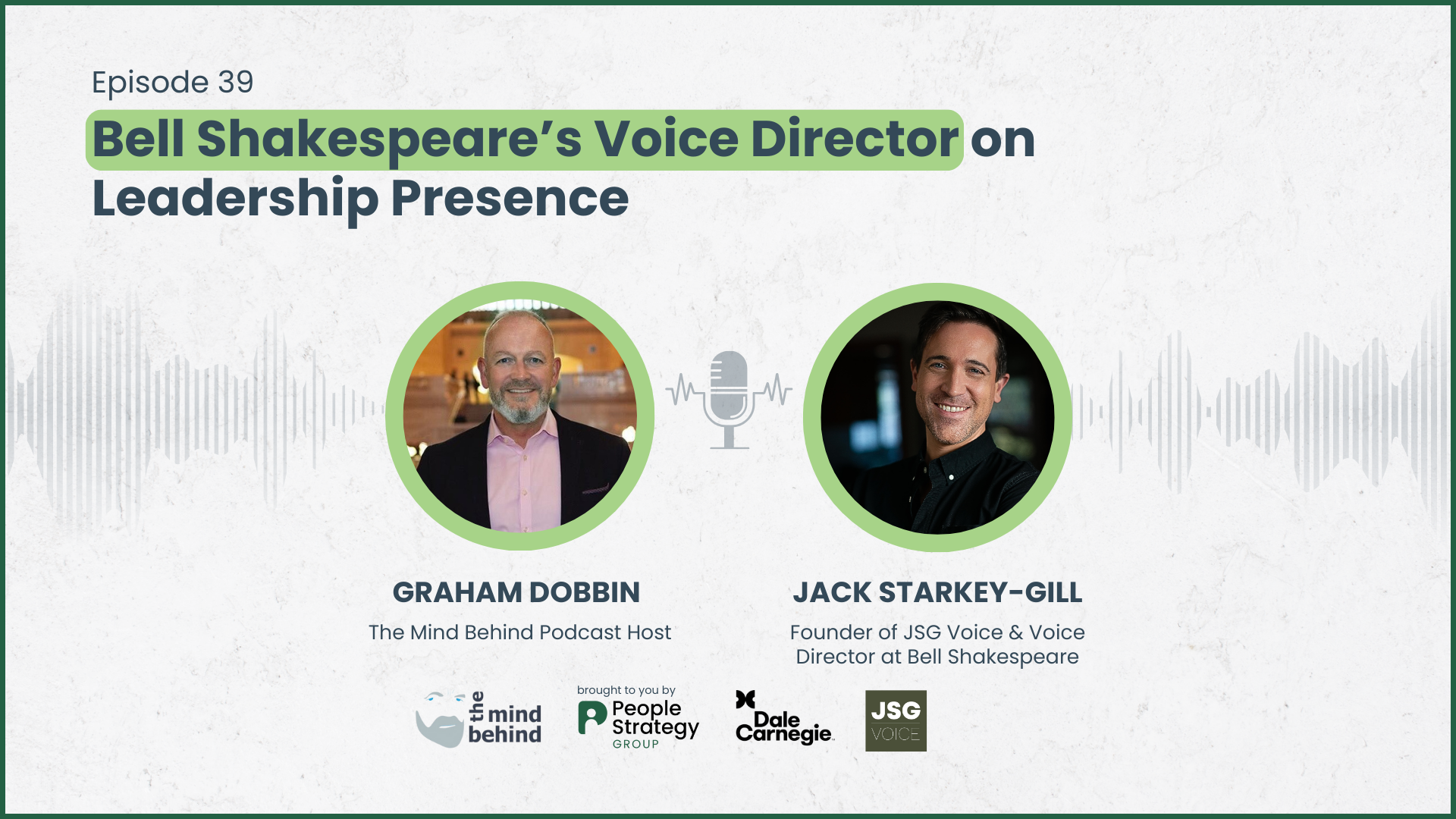
In this episode, Graham chats with Jack Starkey-Gill (Voice Director at Bell Shakespeare and Founder of JSG Voice) about voice as one of the most practical and overlooked leadership tools we have.
Jack shares how his journey from acting into voice direction shaped what “voice work” really means: not sounding polished for the sake of it, but building clarity, flexibility, and connection.
Tune in to explore:
💡 Why pressure so often changes how we sound
💡 How to bring presence without feeling like you’re “putting on a performance”
💡 Jack’s simple “outer hear → inner feel” cue to reduce self-monitoring
💡 Why clarity and human nuance build trust, especially now
Whether you’re leading a team, presenting complex ideas, or simply wanting to feel calmer when you speak, this one offers a grounded, practical way to think about finding (and training) your voice, so your message comes through clearly when it matters.
Connect with Jack / JSG Voice:
🔗 jsgvoice.com
Ever walked out of a meeting knowing you had the right message, but feeling like it didn’t quite land?
In this episode, Graham chats with Jack Starkey-Gill (Voice Director at Bell Shakespeare and Founder of JSG Voice) about voice as one of the most practical and overlooked leadership tools we have.
Jack shares how his journey from acting into voice direction shaped what “voice work” really means: not sounding polished for the sake of it, but building clarity, flexibility, and connection.
Tune in to explore:
💡 Why pressure so often changes how we sound
💡 How to bring presence without feeling like you’re “putting on a performance”
💡 Jack’s simple “outer hear → inner feel” cue to reduce self-monitoring
💡 Why clarity and human nuance build trust, especially now
Whether you’re leading a team, presenting complex ideas, or simply wanting to feel calmer when you speak, this one offers a grounded, practical way to think about finding (and training) your voice, so your message comes through clearly when it matters.
Connect with Jack / JSG Voice:
🔗 jsgvoice.com
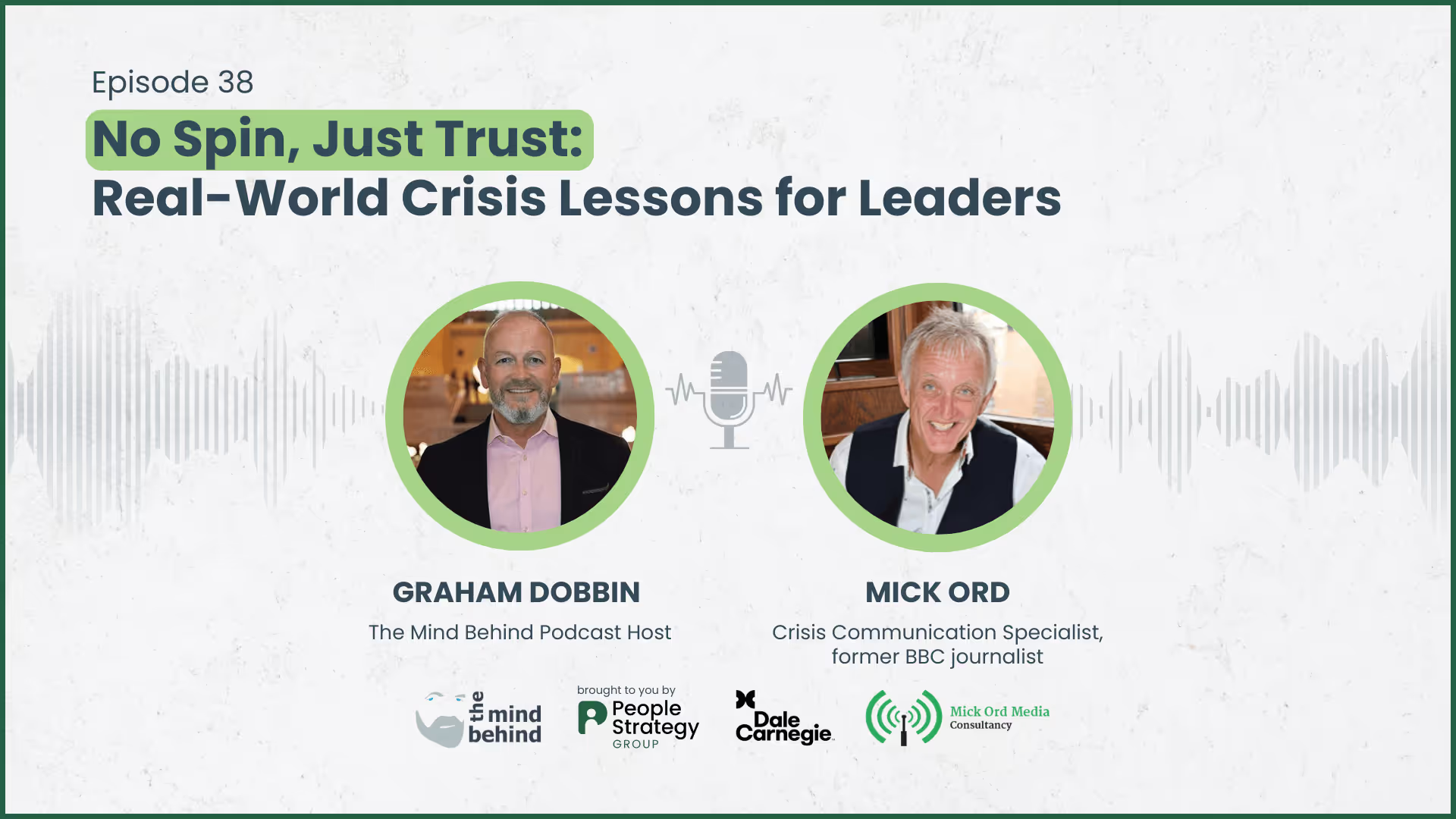
In this episode of The Mind Behind, Graham Dobbin sits down with Mick Ord, former BBC journalist turned crisis communications specialist, to explore what it really takes to build trust when scrutiny is relentless and information is messy.
Drawing on decades inside one of the world’s most watched media institutions, Mick shares how newsroom principles can help leaders communicate clearly, calmly, and credibly when the stakes are high.
Tune in to hear:
• How to build trust when the cameras are rolling
• The illusion of message control and what really matters instead
• Authenticity under pressure and how to lead with it
• Why “no comment” is never a strategy
• How AI and social media are changing crisis response
🎧 If you lead, communicate, or get called on when things go wrong, this one’s for you. Practical, honest insights on staying calm, clear, and credible when the heat’s on.
Connect with:
Mick: linkedin.com/in/mick-ord-80911bb
Graham: https://www.linkedin.com/in/grahamdobbin
Additional links:
Gerald Ratner story: https://thehustle.co/gerald-ratners-billion-dollar-speech
Cyber attack opinion: https://www.mickord.com/british-library-cyber-attack-a-lesson-for-us-all/?utm_source=chatgpt.com
Hillsborough Disaster: https://www.bbc.com/news/uk-england-merseyside-47697569
Toxteth Riots: https://www.theguardian.com/cities/2015/sep/14/toxteth-riots-1981-summer-liverpool-burned-patrick-mi...
Heysel: https://www.brusselstimes.com/1601436/the-heysel-stadium-disaster-40-years-on
In this episode of The Mind Behind, Graham Dobbin sits down with Mick Ord, former BBC journalist turned crisis communications specialist, to explore what it really takes to build trust when scrutiny is relentless and information is messy.
Drawing on decades inside one of the world’s most watched media institutions, Mick shares how newsroom principles can help leaders communicate clearly, calmly, and credibly when the stakes are high.
Tune in to hear:
• How to build trust when the cameras are rolling
• The illusion of message control and what really matters instead
• Authenticity under pressure and how to lead with it
• Why “no comment” is never a strategy
• How AI and social media are changing crisis response
🎧 If you lead, communicate, or get called on when things go wrong, this one’s for you. Practical, honest insights on staying calm, clear, and credible when the heat’s on.
Connect with:
Mick: linkedin.com/in/mick-ord-80911bb
Graham: https://www.linkedin.com/in/grahamdobbin
Additional links:
Gerald Ratner story: https://thehustle.co/gerald-ratners-billion-dollar-speech
Cyber attack opinion: https://www.mickord.com/british-library-cyber-attack-a-lesson-for-us-all/?utm_source=chatgpt.com
Hillsborough Disaster: https://www.bbc.com/news/uk-england-merseyside-47697569
Toxteth Riots: https://www.theguardian.com/cities/2015/sep/14/toxteth-riots-1981-summer-liverpool-burned-patrick-mi...
Heysel: https://www.brusselstimes.com/1601436/the-heysel-stadium-disaster-40-years-on
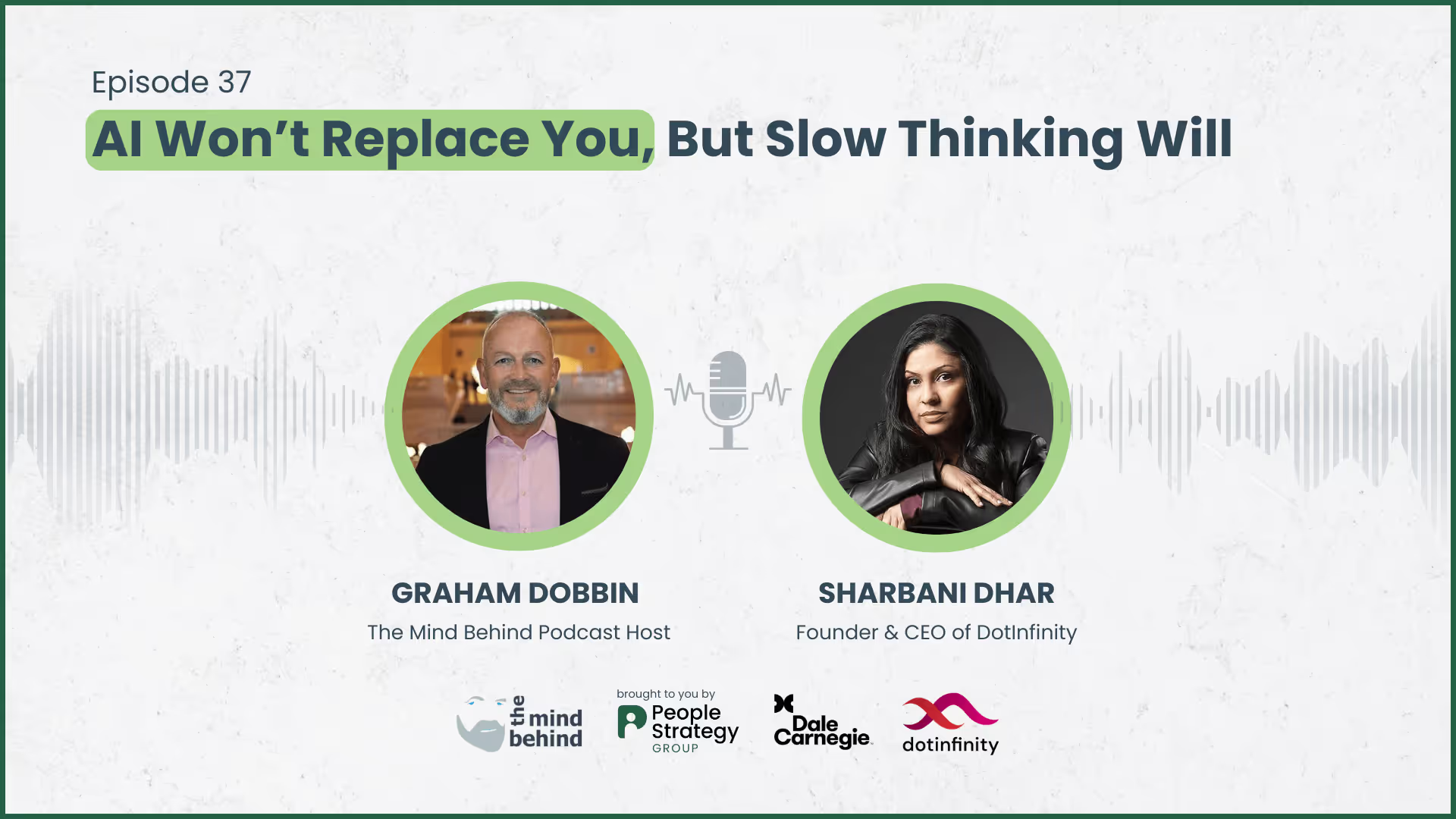
Everyone’s talking about AI. Few are talking about how to keep humans at the centre of it.
In this episode, Graham Dobbin and Sharbani Dhar unpack what happens when innovation stalls under its own caution. From the Australia–India corridor to empathy-led design and human-in-the-loop AI, they explore how trust, curiosity, and capability turn technology into transformation.
🎧 Tune in to explore:
• Why empathy still outperforms algorithms
• How human-centred design is reshaping manufacturing
• What Australia can learn from India’s bold innovation culture
• Why upskilling, not replacement, defines the real future of work
Because staying relevant isn’t about keeping up with AI, it’s about keeping up with ourselves.
Connect with:
Sharbani: https://www.linkedin.com/in/sharbanidhar
Graham: https://www.linkedin.com/in/grahamdobbin
Additional links:
https://www.dotinfinity.co/
Everyone’s talking about AI. Few are talking about how to keep humans at the centre of it.
In this episode, Graham Dobbin and Sharbani Dhar unpack what happens when innovation stalls under its own caution. From the Australia–India corridor to empathy-led design and human-in-the-loop AI, they explore how trust, curiosity, and capability turn technology into transformation.
🎧 Tune in to explore:
• Why empathy still outperforms algorithms
• How human-centred design is reshaping manufacturing
• What Australia can learn from India’s bold innovation culture
• Why upskilling, not replacement, defines the real future of work
Because staying relevant isn’t about keeping up with AI, it’s about keeping up with ourselves.
Connect with:
Sharbani: https://www.linkedin.com/in/sharbanidhar
Graham: https://www.linkedin.com/in/grahamdobbin
Additional links:
https://www.dotinfinity.co/
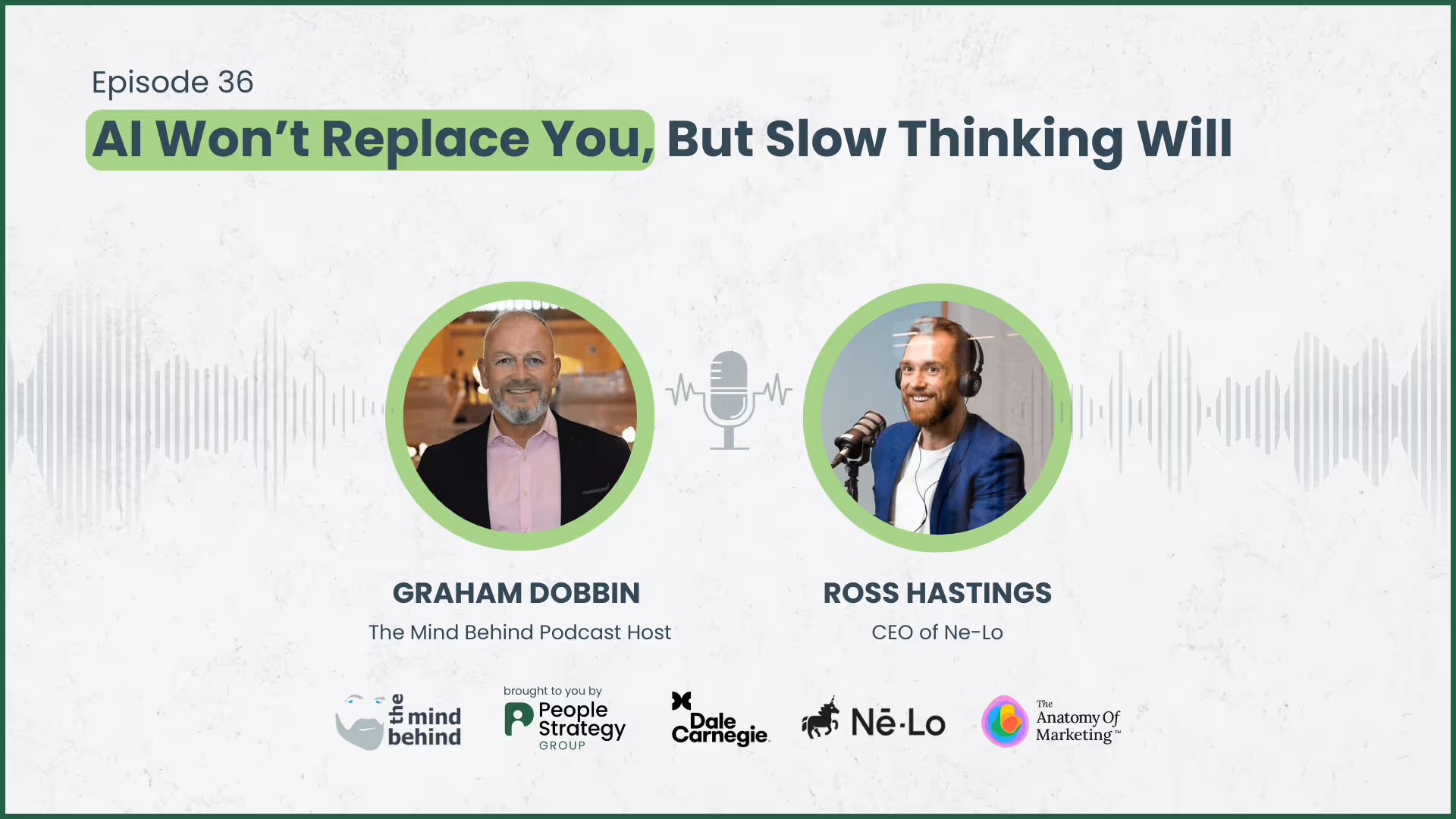
What if the secret to better marketing isn’t more data, campaigns, or ROI — but a completely different way of thinking?
In this episode, Graham Dobbin talks with Ross Hastings, CEO of Ne-Lo and Anatomy of Marketing Training, about how real growth begins when marketing stops being a department and becomes part of how everyone thinks, decides, and connects.
Together, they explore how to:
💡Shift from doing marketing to being marketing and why that changes everything
💡Build capability and confidence across teams
💡Lead with curiosity instead of control
💡Align culture and brand from the inside out
💡Draw lessons from Apple, Spotify, and Rory Sutherland’s Alchemy
Smart, challenging, and refreshingly human, this episode reveals what happens when leaders stop chasing ROI and start creating cultures that think marketing.
Connect with:
Ross: https://www.linkedin.com/in/ross-hastings/
Graham: https://www.linkedin.com/in/grahamdobbin/
Additional links:
Ne-Lo: https://www.ne-lo.com/
Anatomy of Marketing Training: https://anatomyofmarketing.training/
Alchemy: The Surprising Power of Ideas That Don't Make Sense: https://www.amazon.com.au/Alchemy-Surprising-Power-Ideas-Sense/dp/0753556529/ref=sr_1_2?crid=1RQD3B9U9S6S2&dib=eyJ2IjoiMSJ9.yuIt7AXfDuRfCAVlniNUxk5X9kSBPNl4QKTtPu_aqgY-71wNvsGNipyDyI9w-6meHwEp_RAjOBezl6tf57VRRZEqKOVgbst7_YHDb5XmqUk.HoEIYSAcBzryKnorbXMoDRu_Ll-riZ9-nInyJCO8ehA&dib_tag=se&keywords=rory+sutherland+alchemy&qid=1761700969&sprefix=rory+suther%2Caps%2C628&sr=8-2
What if the secret to better marketing isn’t more data, campaigns, or ROI — but a completely different way of thinking?
In this episode, Graham Dobbin talks with Ross Hastings, CEO of Ne-Lo and Anatomy of Marketing Training, about how real growth begins when marketing stops being a department and becomes part of how everyone thinks, decides, and connects.
Together, they explore how to:
💡Shift from doing marketing to being marketing and why that changes everything
💡Build capability and confidence across teams
💡Lead with curiosity instead of control
💡Align culture and brand from the inside out
💡Draw lessons from Apple, Spotify, and Rory Sutherland’s Alchemy
Smart, challenging, and refreshingly human, this episode reveals what happens when leaders stop chasing ROI and start creating cultures that think marketing.
Connect with:
Ross: https://www.linkedin.com/in/ross-hastings/
Graham: https://www.linkedin.com/in/grahamdobbin/
Additional links:
Ne-Lo: https://www.ne-lo.com/
Anatomy of Marketing Training: https://anatomyofmarketing.training/
Alchemy: The Surprising Power of Ideas That Don't Make Sense: https://www.amazon.com.au/Alchemy-Surprising-Power-Ideas-Sense/dp/0753556529/ref=sr_1_2?crid=1RQD3B9U9S6S2&dib=eyJ2IjoiMSJ9.yuIt7AXfDuRfCAVlniNUxk5X9kSBPNl4QKTtPu_aqgY-71wNvsGNipyDyI9w-6meHwEp_RAjOBezl6tf57VRRZEqKOVgbst7_YHDb5XmqUk.HoEIYSAcBzryKnorbXMoDRu_Ll-riZ9-nInyJCO8ehA&dib_tag=se&keywords=rory+sutherland+alchemy&qid=1761700969&sprefix=rory+suther%2Caps%2C628&sr=8-2
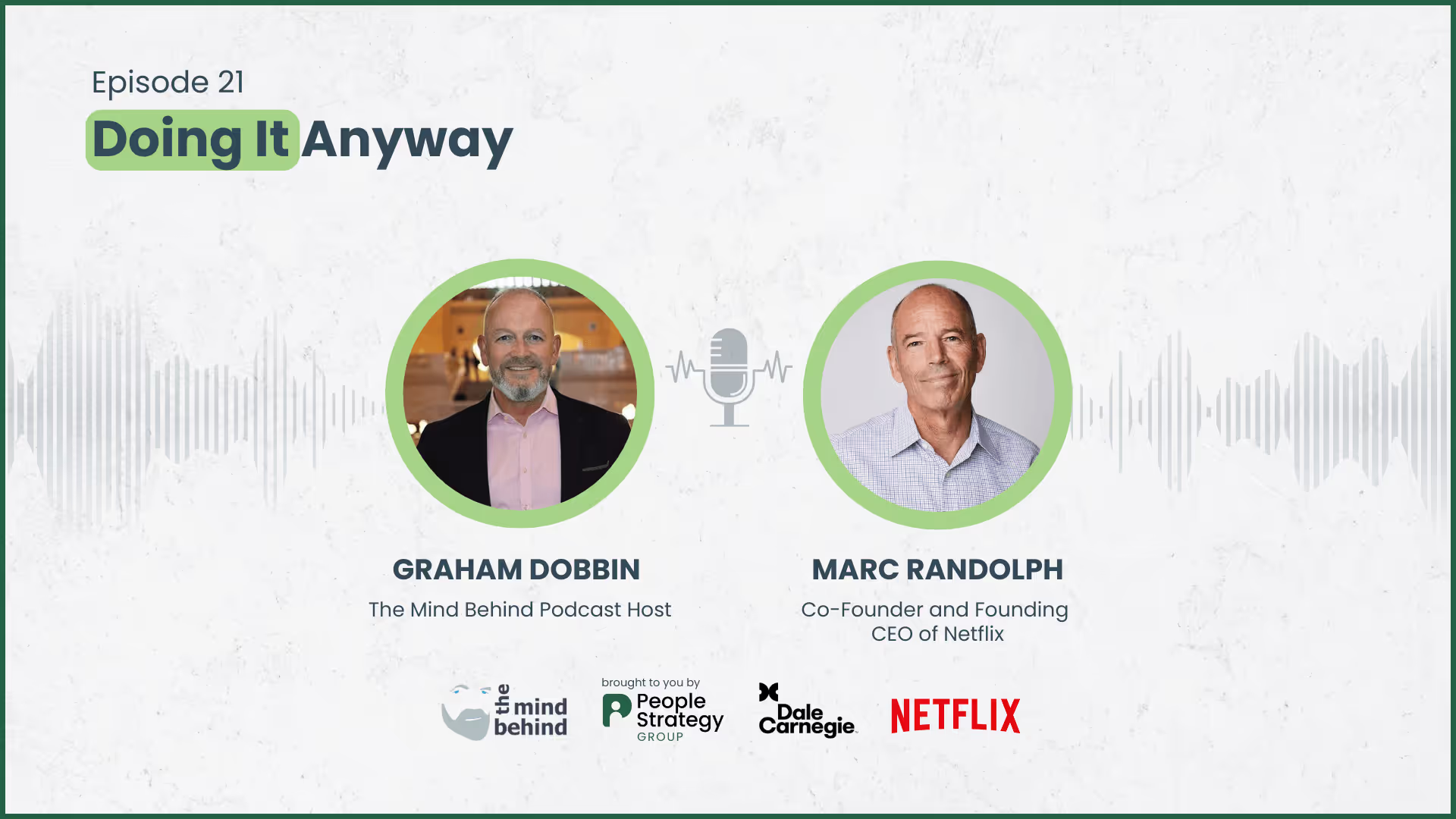
Marc Randolph is a veteran Silicon Valley entrepreneur, advisor, and investor. As co-founder and founding CEO of Netflix, he laid much of the groundwork for a service that’s grown to 150 million subscribers, and fundamentally altered how the world experiences media.
He is the author of the new book, That Will Never Work!
He also served on the Netflix board of directors until retiring from the company in 2003. Marc’s career as an entrepreneur spans four decades. He’s founded or co-founded six other successful startups, mentored hundreds of early stage entrepreneurs, and as an investor has helped seed dozens of successful tech ventures (and just as many unsuccessful ones).
Most recently, he co-founded analytics software company Looker Data Sciences, where he now serves as director. Outside of the tech and startup world, Marc sits on the boards of Chubbies Shorts, Augment Technologies, the environmental advocacy group 1% For The Planet, and the National Outdoor Leadership School (NOLS), which he’s been involved with for most of his life. A resident of Santa Cruz, California, Marc travels and speaks all over the world, and still probably manages to go surfing more than you do.
Marc Randolph is a veteran Silicon Valley entrepreneur, advisor, and investor. As co-founder and founding CEO of Netflix, he laid much of the groundwork for a service that’s grown to 150 million subscribers, and fundamentally altered how the world experiences media.
He is the author of the new book, That Will Never Work!
He also served on the Netflix board of directors until retiring from the company in 2003. Marc’s career as an entrepreneur spans four decades. He’s founded or co-founded six other successful startups, mentored hundreds of early stage entrepreneurs, and as an investor has helped seed dozens of successful tech ventures (and just as many unsuccessful ones).
Most recently, he co-founded analytics software company Looker Data Sciences, where he now serves as director. Outside of the tech and startup world, Marc sits on the boards of Chubbies Shorts, Augment Technologies, the environmental advocacy group 1% For The Planet, and the National Outdoor Leadership School (NOLS), which he’s been involved with for most of his life. A resident of Santa Cruz, California, Marc travels and speaks all over the world, and still probably manages to go surfing more than you do.
Ever walked out of a meeting knowing you had the right message, but feeling like it didn’t quite land?
In this episode, Graham chats with Jack Starkey-Gill (Voice Director at Bell Shakespeare and Founder of JSG Voice) about voice as one of the most practical and overlooked leadership tools we have.
Jack shares how his journey from acting into voice direction shaped what “voice work” really means: not sounding polished for the sake of it, but building clarity, flexibility, and connection.
Tune in to explore:
💡 Why pressure so often changes how we sound
💡 How to bring presence without feeling like you’re “putting on a performance”
💡 Jack’s simple “outer hear → inner feel” cue to reduce self-monitoring
💡 Why clarity and human nuance build trust, especially now
Whether you’re leading a team, presenting complex ideas, or simply wanting to feel calmer when you speak, this one offers a grounded, practical way to think about finding (and training) your voice, so your message comes through clearly when it matters.
Connect with Jack / JSG Voice:
🔗 jsgvoice.com
Ever walked out of a meeting knowing you had the right message, but feeling like it didn’t quite land?
In this episode, Graham chats with Jack Starkey-Gill (Voice Director at Bell Shakespeare and Founder of JSG Voice) about voice as one of the most practical and overlooked leadership tools we have.
Jack shares how his journey from acting into voice direction shaped what “voice work” really means: not sounding polished for the sake of it, but building clarity, flexibility, and connection.
Tune in to explore:
💡 Why pressure so often changes how we sound
💡 How to bring presence without feeling like you’re “putting on a performance”
💡 Jack’s simple “outer hear → inner feel” cue to reduce self-monitoring
💡 Why clarity and human nuance build trust, especially now
Whether you’re leading a team, presenting complex ideas, or simply wanting to feel calmer when you speak, this one offers a grounded, practical way to think about finding (and training) your voice, so your message comes through clearly when it matters.
Connect with Jack / JSG Voice:
🔗 jsgvoice.com
In this episode of The Mind Behind, Graham Dobbin sits down with Mick Ord, former BBC journalist turned crisis communications specialist, to explore what it really takes to build trust when scrutiny is relentless and information is messy.
Drawing on decades inside one of the world’s most watched media institutions, Mick shares how newsroom principles can help leaders communicate clearly, calmly, and credibly when the stakes are high.
Tune in to hear:
• How to build trust when the cameras are rolling
• The illusion of message control and what really matters instead
• Authenticity under pressure and how to lead with it
• Why “no comment” is never a strategy
• How AI and social media are changing crisis response
🎧 If you lead, communicate, or get called on when things go wrong, this one’s for you. Practical, honest insights on staying calm, clear, and credible when the heat’s on.
Connect with:
Mick: linkedin.com/in/mick-ord-80911bb
Graham: https://www.linkedin.com/in/grahamdobbin
Additional links:
Gerald Ratner story: https://thehustle.co/gerald-ratners-billion-dollar-speech
Cyber attack opinion: https://www.mickord.com/british-library-cyber-attack-a-lesson-for-us-all/?utm_source=chatgpt.com
Hillsborough Disaster: https://www.bbc.com/news/uk-england-merseyside-47697569
Toxteth Riots: https://www.theguardian.com/cities/2015/sep/14/toxteth-riots-1981-summer-liverpool-burned-patrick-mi...
Heysel: https://www.brusselstimes.com/1601436/the-heysel-stadium-disaster-40-years-on
In this episode of The Mind Behind, Graham Dobbin sits down with Mick Ord, former BBC journalist turned crisis communications specialist, to explore what it really takes to build trust when scrutiny is relentless and information is messy.
Drawing on decades inside one of the world’s most watched media institutions, Mick shares how newsroom principles can help leaders communicate clearly, calmly, and credibly when the stakes are high.
Tune in to hear:
• How to build trust when the cameras are rolling
• The illusion of message control and what really matters instead
• Authenticity under pressure and how to lead with it
• Why “no comment” is never a strategy
• How AI and social media are changing crisis response
🎧 If you lead, communicate, or get called on when things go wrong, this one’s for you. Practical, honest insights on staying calm, clear, and credible when the heat’s on.
Connect with:
Mick: linkedin.com/in/mick-ord-80911bb
Graham: https://www.linkedin.com/in/grahamdobbin
Additional links:
Gerald Ratner story: https://thehustle.co/gerald-ratners-billion-dollar-speech
Cyber attack opinion: https://www.mickord.com/british-library-cyber-attack-a-lesson-for-us-all/?utm_source=chatgpt.com
Hillsborough Disaster: https://www.bbc.com/news/uk-england-merseyside-47697569
Toxteth Riots: https://www.theguardian.com/cities/2015/sep/14/toxteth-riots-1981-summer-liverpool-burned-patrick-mi...
Heysel: https://www.brusselstimes.com/1601436/the-heysel-stadium-disaster-40-years-on
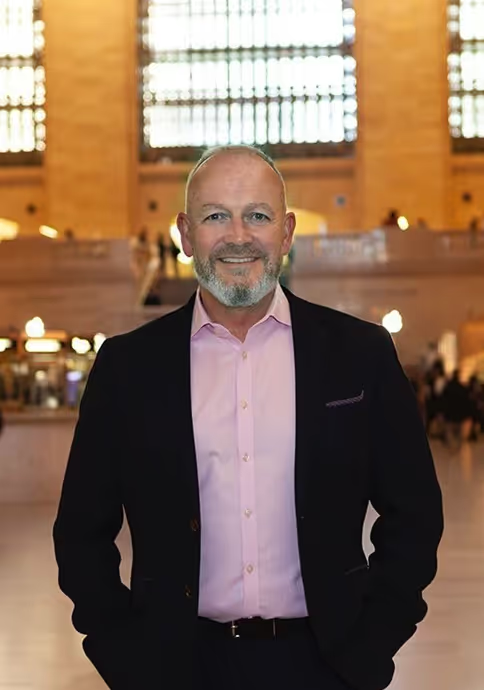
Graham Dobbin
Never one to hold back, Graham brings a direct, curious voice to every conversation. As a podcast host, facilitator and speaker, he asks the tough questions that get people thinking and knows how to engage audiences of all kinds.
Naturally inquisitive from a young age, that same curiosity now drives him to explore what makes people, teams and organisations really tick.
Today, Graham works with organisations like Specsavers, Amazon, LinkedIn and Macquarie across Australia, the US and the UK, exploring the shifts shaping work — from new skill demands and AI to leadership, culture and the everyday challenges of hybrid teams and talent.

_edited.avif)
Graham's recent clients